From Barrens to Forests: The Local Mission to Save Tutukaka’s Kelp


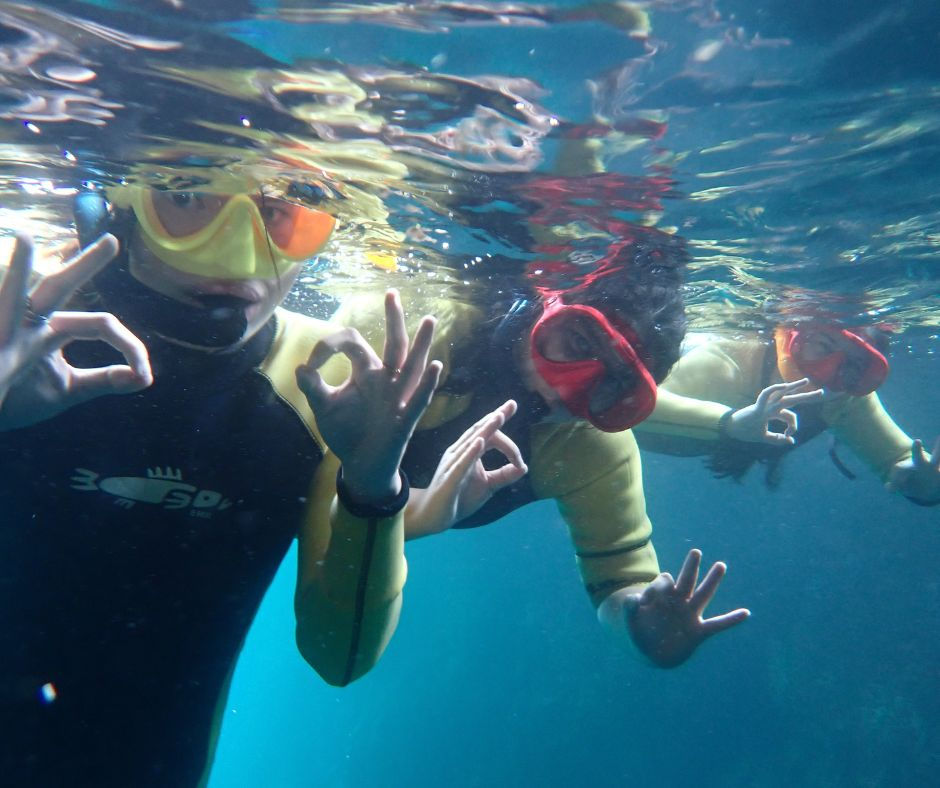
Chanelle, Bodhi (8) and Nave (10) Armstrong by Motu Te Maika - Philip Island
Protected from a roaring southerly, Church Bay was the venue for the Seaweed Snorkel event on Saturday, where haukainga, local residents and conservationists gathered to learn about the vital role of kelp forests in the Tutukaka Harbour. The event, hosted by the Mountains to Sea Conservation Trust and supported by the Te Waiariki, Ngāti Kororā, Ngāti Takapari Hapū Iwi Trust, focused on "kelp gardening", the ecological relationship between kina and kelp, and the community-led efforts to participate in the restoration of these underwater ecosystems.
Mountains to Sea event lead Pippa Benton and Dr. Glenn Edney from Te Wairua O Te Moananui Ocean Spirit welcomed participants, with Dr. Arvay Armstrong-Read from Te Waiariki, Ngāti Kororā, Ngāti Takapari Hapū Iwi Trust opening the day with a karakia.
“The Church Bay Seaweed Restoration Project is about more than ecological restoration, it’s community engagement, connection to place, and a deeper understanding of the role we play in maintaining healthy ecosystems. It is truly a privilege to be part of the knowledge sharing process and provide opportunities for whānau and communities to learn more about the awesome mahi being done in their rohe moana,” Pippa Benton.

Dr. Glenn Edney explaining the relationship between kina and kelp with Pippa watching on.
A Changing Harbour
Dr. Glenn Edney, who has dived in the area for four decades, shared his observations on the harbour's health. "I came here 40 years ago, there were kelp forests everywhere. There was good fish life. Over the last 40 years, we have seen the deterioration of the harbor."
He explained that overfishing has led to an explosion of "kina barrens", areas where sea urchins have overgrazed the kelp, leaving the reef bare. "The more overfishing, the more likely it is you're going to get more and more kina barrens. A kina barren is nothing except an illustration of imbalance," Edney explained.

Pippa Benton snorkelling over regenerated kelp | Kina barrens outside the restoration site.
Connecting Haukainga to the Moana

Chanelle, Nave (10) and Bodhi (8) Armstrong looking into the green gravel beds.
Local haukainga Chanelle Armstrong, who attended with her tamariki Nave (10) and Bodhi (8), spoke of the importance of involving the next generation. "Because we live out here, I think part of our responsibility is to make sure that our whānau and our moana are well looked after," she said.
Armstrong noted the emotional impact of seeing the difference between healthy reefs and barrens. "We recently went to a kina barren and the kina were so small. It made me feel really sad. But seeing all of this beautiful kelp swaying today made me really happy and hopeful."
She emphasized the connection between environmental and community health, stating, "When our moana is well, then we are well."
Dr Arvay Armstrong-Read also shared that the restoration project will be instrumental in assisting to further restore and reinvigorate other areas across the hapū rohe moana.
Participating in Regeneration
Participants visited a local kelp growing facility to see the "green gravel" method used for restoration. Edney clarified that while they facilitate the process, nature does the heavy lifting.
"You might hear we are growing kelp, which is complete rubbish. Of course we’re not growing kelp - kelp grows kelp. What we’re doing, though, is participating in the kelp growing process."
The process involves collecting reproductive tissue and allowing it to settle onto pebbles, which are then planted back onto the reef. "When we talk about a kelp forest, these are the trees. Without them, we no longer have a forest ecosystem," Edney added.

Green gravel
Jess Collins is a local who has been part of the project since its beginning. Saying in her evaluation, “[It was a] most wonderful experience, so great to see the rimurimu growing. I learned about kina and seaweed while being looked after in a nice warm wetsuit.”

Local Jess Collins snorkelling at the restoration site.
Looking Forward
The event also highlighted recovering seagrass beds in the bay, which have benefited from recent temporary closures to fishing. Organizers expressed a huge thank you to the regular volunteers and funders who made the day possible. For more information on the kelp regeneration project or to view photos from the event, please visit the event album. If your community led initiative needs support for your project - please reach out via our website www.mountainstosea.org.nz and we may be able to partner to provide events like this.

Recovering seagrass beds